
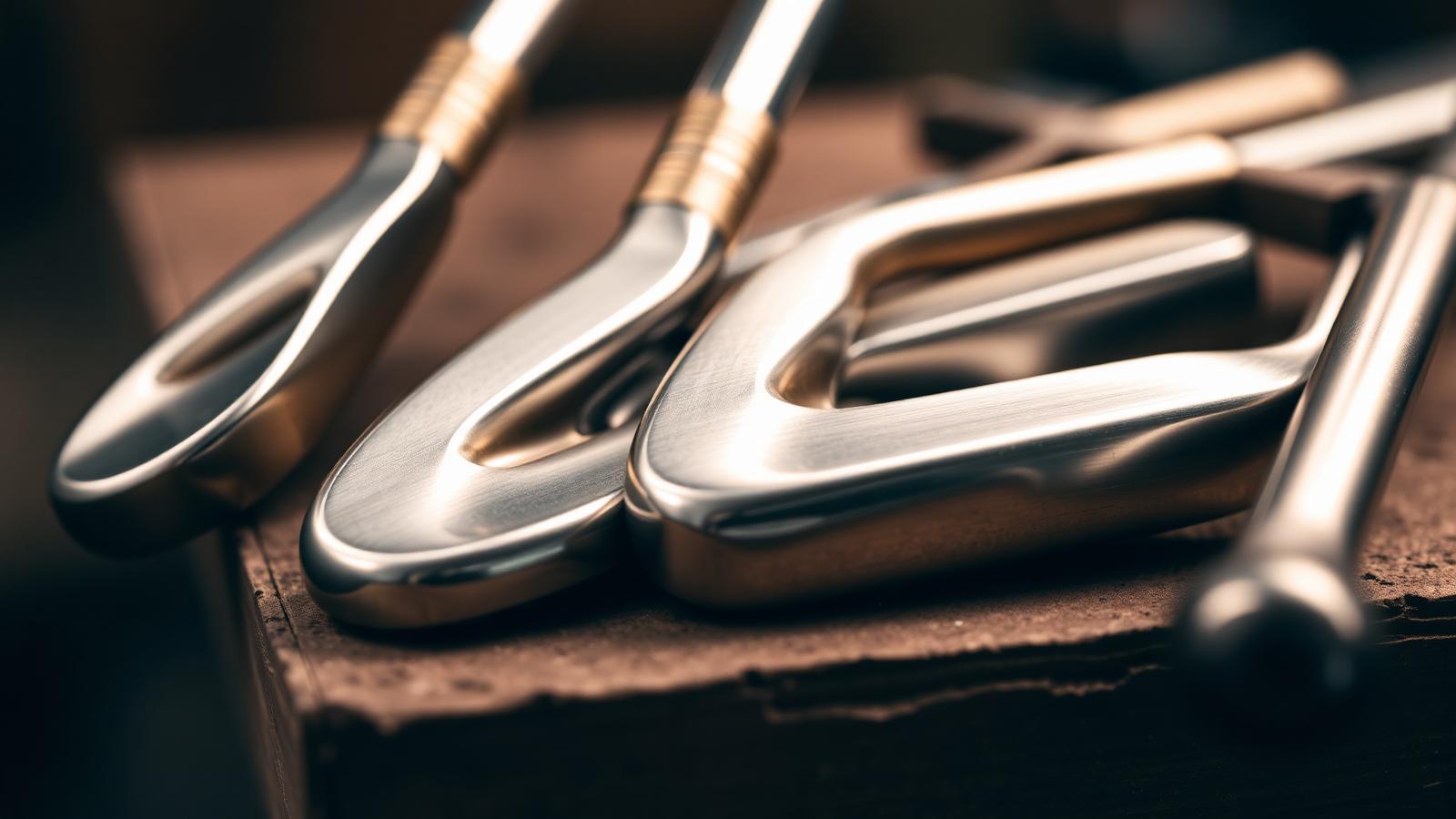
Hand-Forged Irons
Miura, Mizuno Yoro, Endo Manufacturing — the Japanese forging tradition that underlies the most coveted iron sets in the game.
Japanese forged irons are the most over-mythologized category in equipment and also the most genuinely exceptional. The mythology — secret steel, mountain water, decades-deep apprenticeships — is mostly marketing. The genuine exceptionalism is grain structure, lie- and loft-tolerance control, and a centerpoint mass distribution that legitimately changes the feedback profile at impact.
Three names matter at the top of the market: Miura (Himeji), Mizuno (Yoro forging facility), and Endo Manufacturing (Fujishima, which forges heads sold under Titleist, TaylorMade, and PXG brands). Below these three, the marketing-to-quality ratio becomes unfavorable quickly.
Why hand-forged feels different
Drop-forged 1025 carbon steel, milled to ±0.5° on lie and loft (versus ±1.5–2.0° on cast game-improvement heads), with a center of gravity tuned by mass-distribution choices rather than perimeter-weighting tricks. The result is a noticeably softer impact, a more linear miss pattern, and feedback that a low- to mid-handicap player can interpret reliably across an iron set.
Miura specifics
The MB-101 is the editor reference for a true blade; the CB-301 the reference for a refined cavity-back that retains blade-like feel. Miura sells through authorized fitters only; build time runs 6–10 weeks; full set with custom shafts and grips runs $3,500–$5,500.
Mizuno Yoro specifics
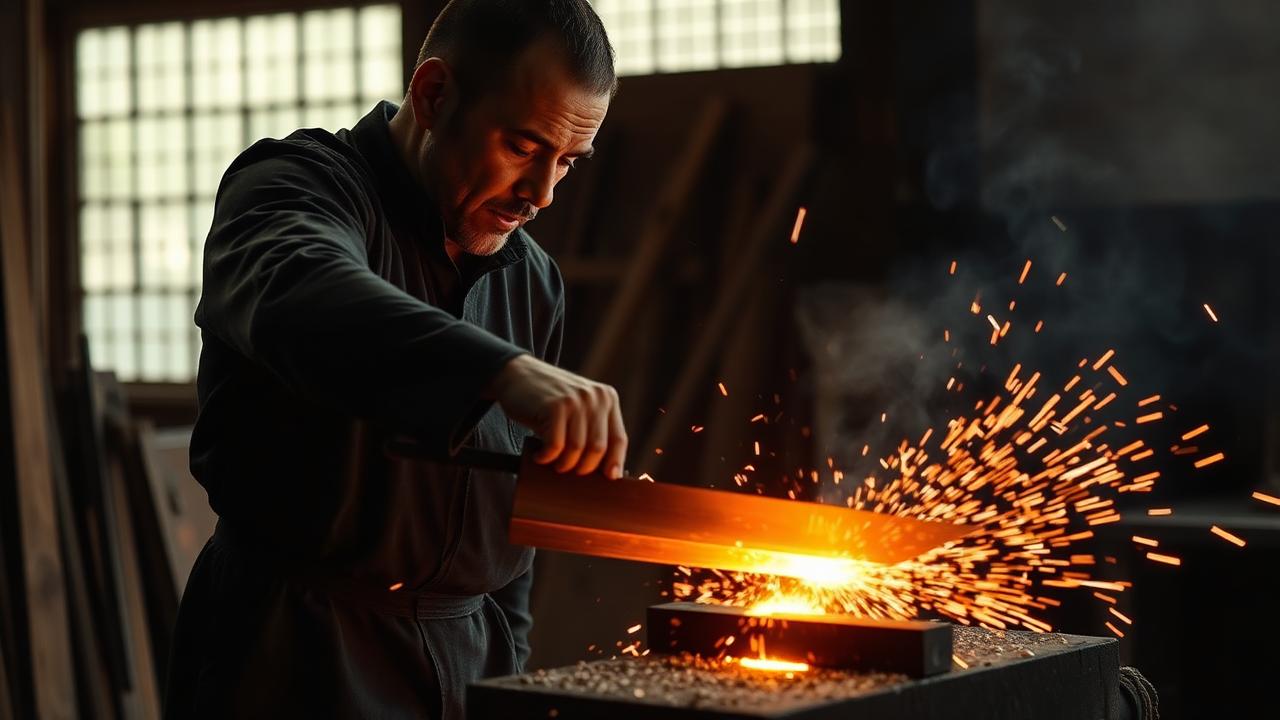
Mizuno's Yoro forging line (MP-25, MP-Z25, JPX-925 Tour) delivers 90 percent of the Miura experience at meaningfully lower cost. Mizuno's grain-flow forging process is the longest-running production technique at scale in the industry. Authorized-fitter build time is 3–5 weeks; full set with custom shafts runs $1,800–$2,800.
Endo Manufacturing (in OEM branding)
Endo forges heads for Titleist (the 622, 621, T100 Tour lines), TaylorMade (P770, P7MB), PXG (0317 ST), and others. The OEMs do not always advertise the Endo forging origin, but the heads carry the same forging quality as a name-brand Japanese forging. For golfers who prefer mainstream OEM service networks and shaft programs, Endo-forged OEM heads are the practical Japanese-forging option.
About Hand-Forged Irons
- Are forged irons harder to hit than cast game-improvement irons?
- Yes, by design. Forged blades and cavity-backs concentrate mass behind the sweet spot, which reduces forgiveness on off-center hits in exchange for feedback and shot-shaping control. Most golfers with a handicap above 12 will score better with a modern cast game-improvement iron.
- How long do forged irons last?
- Decades, with regripping every 1–2 seasons and a lie-and-loft check every 3–5 years. The shafts and grips wear out long before the heads do.
- Is the Japanese steel actually special?
- The 1025 carbon steel itself is not exotic; the milling tolerance and grain-flow forging process are. The marketing about mountain water and forge sites is largely irrelevant to the playing experience.